
Only Human After All
Why we need more resonance and less convenience

Why does my tea taste better out of a mug shaped by the hands an old friend? Why does sewing a sweatshirt as a present feel like giving a warm hug? And why is a hand-drawn message from my son so much more touching than a shop-bought card? In all three cases, the homemade objects are love embodied in creative form, made especially beautiful by their uniqueness and imperfections. I can still see the pencil lines under the pen on my son’s drawing. The clothes I make for friends have loose threads and wonky seams and my favourite cup wobbles slightly on a flat surface.
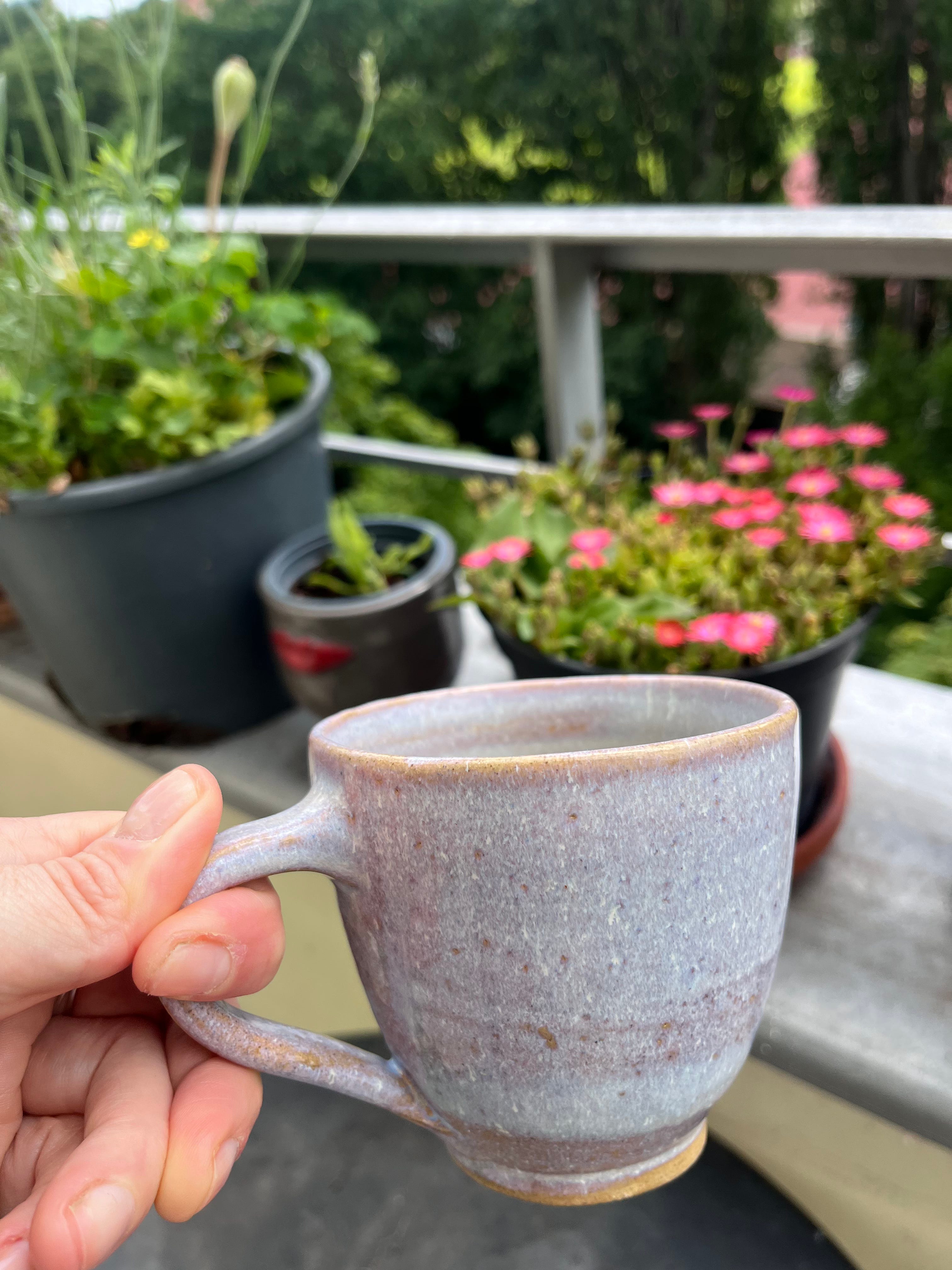
Humans crave human-made things and human-curated spaces, information and experiences. In this digital age, we are hooked by algorithms that serve us up what we want like an invisible but all-knowing butler. But many people are starting to push back against the individualistic desire-maximisation touted by the tech bros, who want to monetise the removal of all of life’s inconveniences - or friction.
Writer Kathryn Jezer-Morton made waves when she called for 2026 to be the year of “friction-maxxing” – or consciously avoiding things that make her life more convenient like online shopping, food delivery and ChatGPT. In a tiny act of resistance, I have stopped paying for audio books on demand on Spotify and am instead enjoying the serendipity of what is available on a free library app.
Berlin-based artist Hito Steyerl also makes an appeal for friction, citing philosopher Immanuel Kant who noted that a dove would be wrong if it thought it can fly faster in a vacuum. Steyerl says that Silicon Valley is building this kind of a vacuum by pushing friction out of sight while trying to evade any kind of accountability or historical limits.
“If you take away the air resistance, the friction, the dove will fall like a stone out of the sky. It’s friction that gives the dove lift,” she told the Re:publica conference in Berlin. “You need friction so doves can fly instead of automated drones which are trained to kill you.”
In recent years, many organisations – including in the media - have pushed AI like an intoxicating drug, while ignoring the nasty side effects. But humans are reasserting their mastery in some areas.
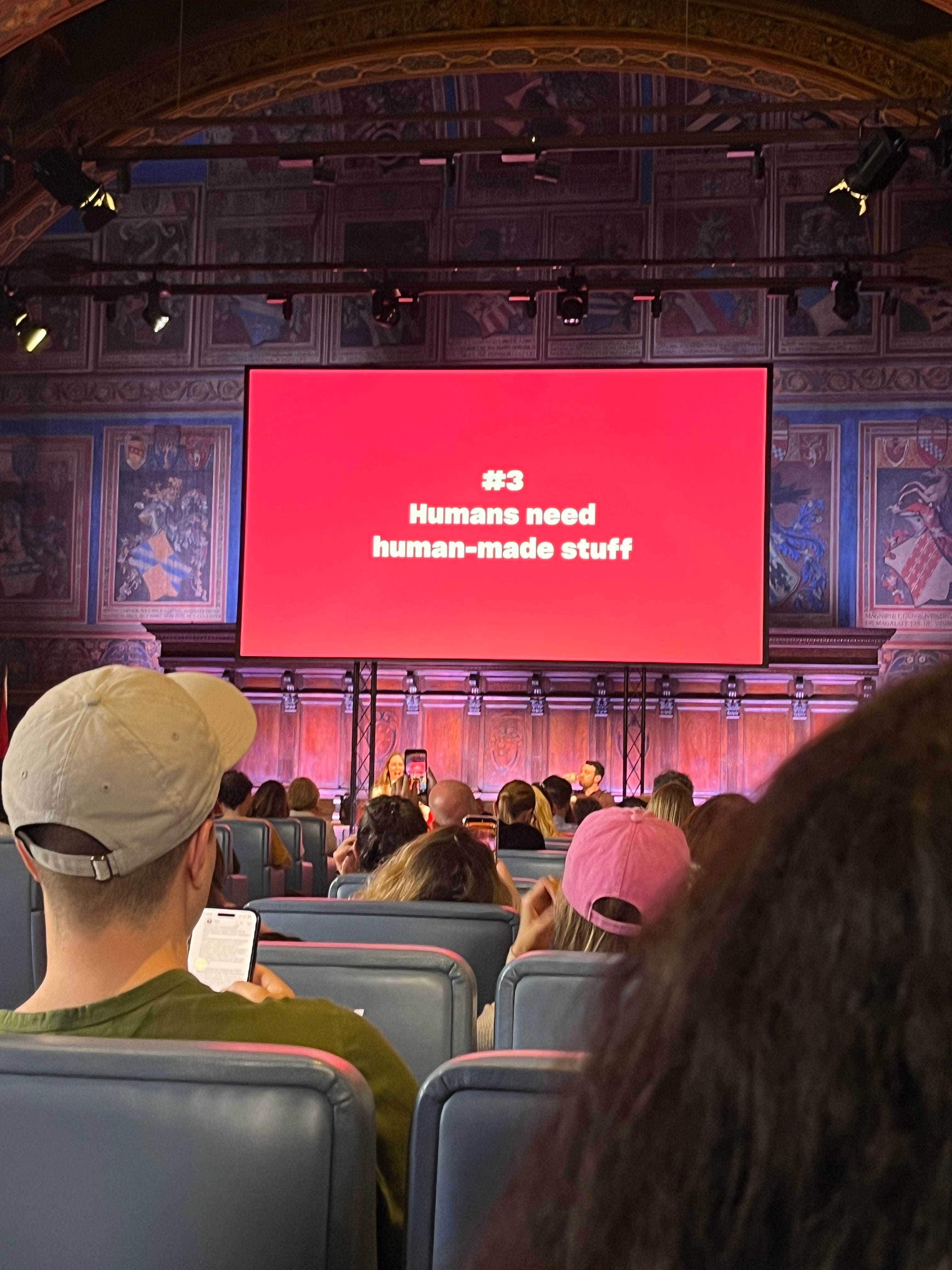
India’s Hindu Times ran an ad campaign last year called “Written by Journalists” to stress the importance of human fact-checking, editing, and public accountability.
“Our readers trust us to separate fact from noise. We are in an age where content is everywhere, but credibility is rare, being ‘Written by Journalists’ is not a campaign name but it’s our truth,” said LV Navaneeth, CEO of The Hindu Group.
Do your bit for humans
My main source of news nowadays is a daily newsletter of curated stories from “The Knowledge”. They made this recent appeal: “We’re not Luddites, and we’re experimenting all the time, but for the important stuff we’ve found that algorithms are still no substitute for the real deal: us. To do your bit for humans and stick one in the eye for the machines, can we convince you to take out a paid subscription?”
Danish news publication Zetland has won 50,000 paid subscribers by emphasising human connection – including encouraging its journalists to develop their own voices and express emotions, such as choosing to broadcast part of an interview on a serious topic when a reporter burst out laughing.
“Knowing and feeling that something is made by other humans makes it so appealing,” said Lea Korsgaard, Zetland co-founder and editor, as she presented what she calls a “manifesto for the romantic school of journalism” at the International Journalism Festival in Perugia.
“We need the ability to believe we share the same community. We have something in common, we are humans,” Korsgaard said.
Photographer Dermot Tatlow has decided to embrace what he calls “evidence of hand” in his beautiful collages that lean into a process that no AI could replicate.
“We don’t see the world in the single static image of the photograph but in multiple micro-views, unconsciously zooming in and out to absorb the visual information which our brain merges to form memory,” he writes.
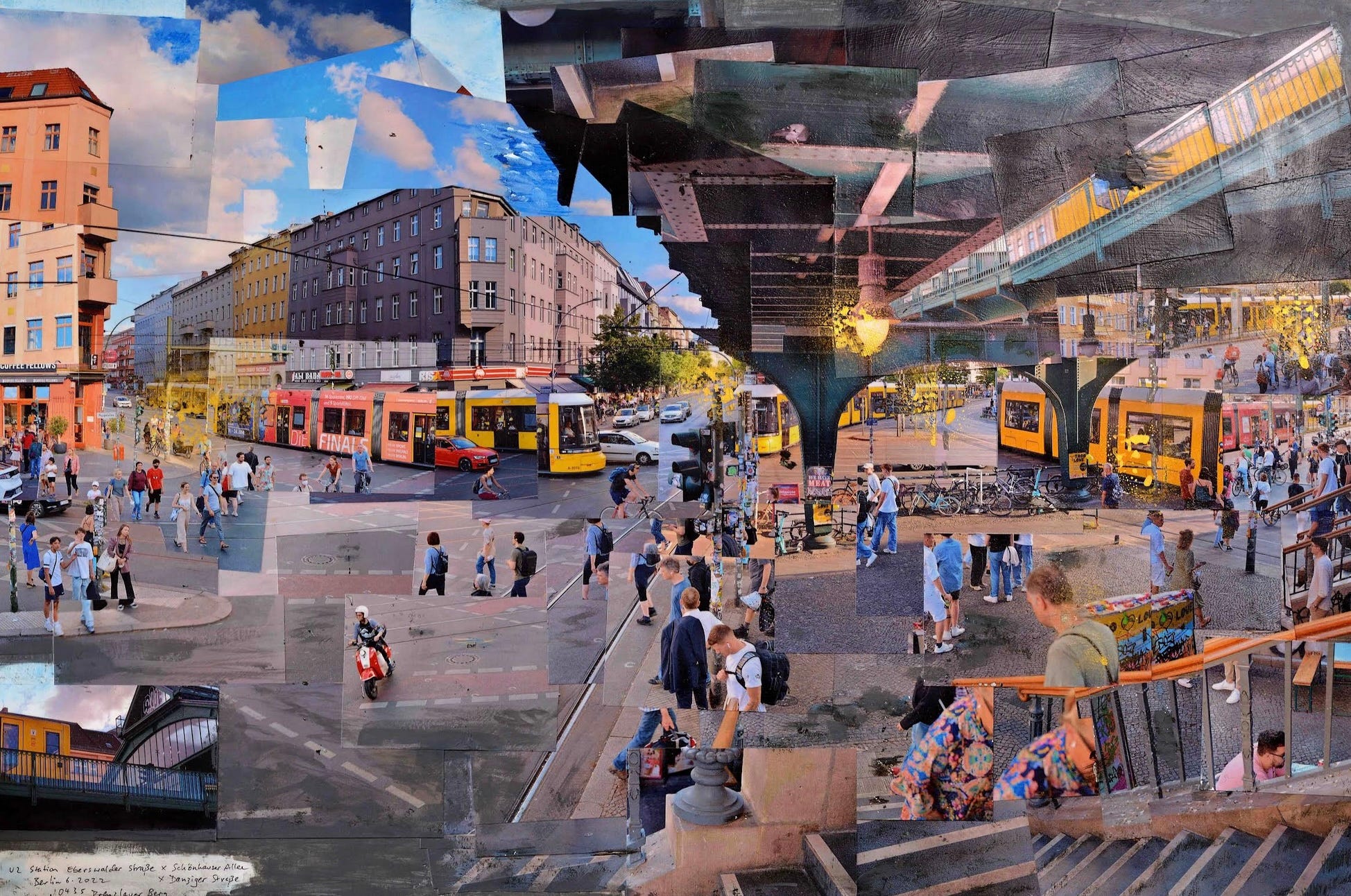
Like my wobbly cup and home crafts, it is often the seams, the joints or the faults that show us that something is human-made and which makes it endearing.
FT journalist Emma Jacobs attracted thousands of likes and hundreds of messages of support when she admitted she made an embarrassing mistake in an interview with author Brene Brown: she quoted Brown as saying she was “solidly in my f*cking era”, when she had actually described the phase in her life as her “f*ck it era”.
“As f*ckups go it’s rather fabulous on multiple counts and the world is a better place for it. Well done for styling it out, sister,” read one response on LinkedIn.
We are more likely to trust people who admit mistakes and express vulnerability, as I explored in this blog. We instinctively recognise too-perfect AI images of faces as fake or flat, so they are often edited to add asymmetry and imperfections.
Anybody who has chatted with a bot can sense that something major is missing: resonance with a real person, who laughs and breathes and cries.
Human immune response
This “resonance” arises out of uncontrollable and authentic experiences in contrast to the manufactured and controlled ones sold to us by consumerism, according to German sociologist Hartmut Rosa.
“The basic mode of vibrant human existence consists not in exerting control over things but in resonating with them,” Rosa writes.
That helps explain why there has been such a revival of live events and music in the post-pandemic era. Research shows that members of an audience literally resonate with each other – syncronising breath and heartbeat – when listening to a concert. I was reminded of this again when I watched the fabulous Netflix documentary about Kylie Minogue and her electric connection with her fans.
The defence of the human against soulless, unregulated slop is taking on a political edge: journalist Karen Hoo has compiled what she calls the AI resist list of initiatives that are pushing back against “AI empires” that seek to mine our minerals, data, creativity, land and energy.
“I do not see the nightmares of these companies. I don’t see the vacuum that they are trying to build actually happening because of the immune system response that is bubbling up all around the world,” Hoo said.
What are you doing to join the resistance and maximise friction in your life? I’m thinking about setting up a “friction” bookstore/cafe/meet-up. Watch this space.
What I am reading:
Killing Commendatore by Haruki Murakami - This is a very meandering tale about a Japanese artist who has just split from his wife that veers into magical realism when he discovers a hidden shrine in the mountains. I listened to it mostly in a half-waking state at night and felt transported to another world, watched over by a mystical owl.
Love Medicine by Louise Erdrich - The story of two families across three generations set on a Native American reservation told by different narrators. It was compelling but confusing at times as the various voices wove in an out of one another. I do want to visit the author’s bookstore in Minneapolis one day.